

Can you write off the cost of a vending machine under Section 179? A section 179 tax deduction vending machine purchase may qualify, but the answer depends on business use, ownership, and when the machine became ready to operate.
For 2026, route operators need to consider annual limits, taxable income, financing terms, lease language, and filing details. Tax rules can differ by business and tax year, so review the facts before making an election.
Key Takeaways
- An owned vending machine used more than 50% for an active business may qualify.
- The machine must be placed in service during the applicable tax year.
- Financing doesn't automatically block Section 179, but standard leases may receive different treatment.
- The 2026 deduction limit is $2,560,000, subject to phaseout and business-income limits.
- Form 4562 documents the election.
Section 179 Tax Deduction Vending Machine Rules Explained
Section 179 lets eligible businesses elect to expense the cost of certain qualifying tangible property instead of depreciating it over time. Although IRS Publication 946 doesn't name vending machines, an owned machine used in an active vending route or business location may meet the general requirements.
A personal machine, a machine held only as an investment, or equipment without reliable records may not qualify. For mixed-use equipment, business use generally must exceed 50%. A section 179 tax deduction vending machine claim also requires the machine to be placed in service during the tax year.
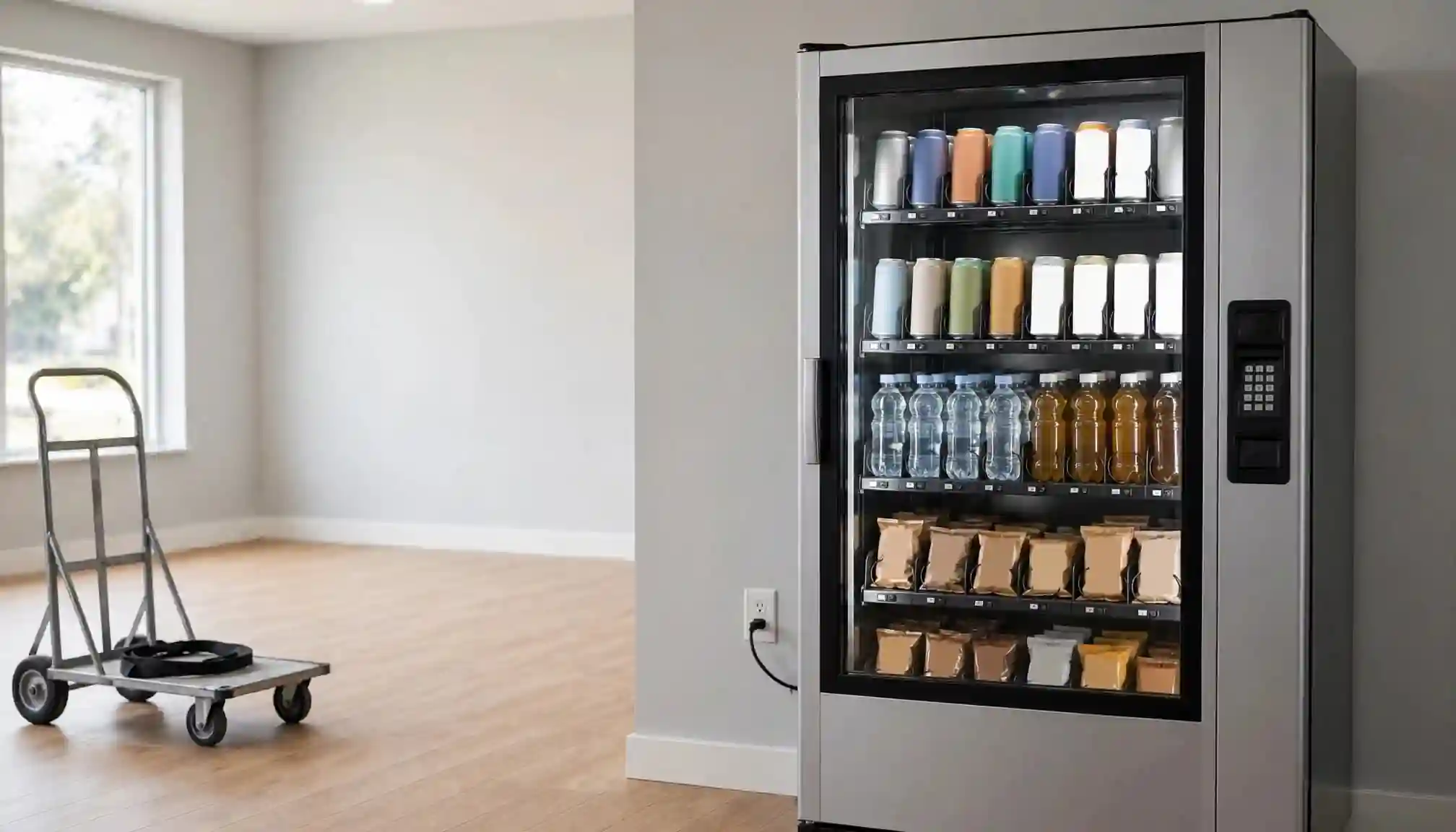
A stocked vending machine stands beside a wall outlet and delivery dolly.
What Counts as Business Use for a Vending Machine?
Business use includes a machine operating on your route, installed at a customer location, or selling products as part of your active company. The machine should produce business activity, not sit in storage waiting for resale.
Keep records that show its location, purchase date, business purpose, and percentage of business use. Delivery records, location agreements, sales reports, and maintenance logs can support the position you take on the return.
When Does a New or Used Machine Become Eligible?
New and used machines can potentially qualify, provided the property meets the applicable requirements and is new to your business. Used does not mean automatically eligible.
The machine must be ready and available for its intended business use. Signing a purchase agreement, paying a deposit, or receiving a loan approval alone doesn't establish that date. This matters even more if your business uses a fiscal year rather than a calendar year.
How Much Can You Deduct in 2026, and How Do You Claim It?
For tax years beginning in 2026, the maximum Section 179 deduction is $2,560,000. The phaseout starts when total qualifying property placed in service exceeds $4,090,000, and the deduction is fully phased out at $6,650,000. Review the current 2026 Section 179 limits and phaseout figures before filing.
These thresholds cover all qualifying equipment placed in service, not one vending machine. Tax-year rules can change, so confirm the figures with the IRS or a qualified tax professional.
How the Business-Income Limit and Carryover Work
Section 179 generally can't exceed taxable income from the active conduct of your trade or business. For example, a route operator may have $80,000 of qualifying equipment costs but only $45,000 of eligible business income for the year.
In that case, the current deduction may be limited to $45,000. The unused amount can generally carry forward, subject to future-year rules, and remains part of the Form 4562 calculation.
How to Report the Deduction on Your Tax Return
Business owners generally make the election in Part I of Form 4562, listing the property and elected cost. The form must be attached to a timely filed original return, including extensions. Follow the IRS Form 4562 instructions for current filing requirements.
Save invoices, financing documents, delivery or installation records, and proof of business use. Those documents should match the cost and dates reported on the return.
Buying, Financing, or Leasing a Vending Machine: What Changes?
The contract matters as much as the machine. Cash isn't the central test, but ownership, cost, business use, and placed-in-service timing are.
Can a Financed Vending Machine Qualify?
Borrowing money to buy equipment doesn't by itself prevent a Section 179 election. A financed machine may qualify if the business owns it and meets the other requirements.
Don't confuse loan payments with the machine's deductible cost. Match the purchase contract, financing papers, invoice, and delivery date before reporting the election.
Why a Lease May Not Receive the Same Tax Treatment
A standard lease may not give the lessee the same Section 179 deduction available for owned equipment. The agreement could be a true lease, a conditional sale, or a lease-to-own arrangement, and each can have different tax treatment.
Have a tax professional review the contract before claiming a deduction. Labels used in marketing materials don't control the tax result.
When Regular Depreciation May Be the Better Choice
Section 179 is elective, not mandatory. Regular MACRS depreciation may fit better when income is low, deductions should be spread across several years, or the business exceeds the annual spending limits.
Bonus depreciation rules and other tax provisions can change. No single method is best for every vending operation.
Frequently Asked Questions
Can I Claim Section 179 for a Used Vending Machine?
A used machine may qualify if it meets the property rules, supports an active business, and is placed in service during the tax year. Document the acquisition and business purpose because used equipment isn't automatically eligible.
Can I Claim Section 179 on More Than One Vending Machine?
A business can consider multiple qualifying machines. However, the annual limit and phaseout apply to the total cost of qualifying Section 179 property placed in service, and business income can limit the current-year deduction.
What Happens If I Stop Using the Machine for Business?
A later drop in business use to 50% or less can trigger depreciation recapture or other tax consequences. Track changes in use and seek tax advice before selling, removing, or converting the machine to personal use.
Can I Deduct Inventory and Repairs Under Section 179?
Section 179 applies to qualifying property costs, not automatically to inventory, stocked products, routine repairs, supplies, or operating expenses. Account for those costs separately instead of adding them to the machine's purchase price.
Final Checks Before You Elect Section 179
Confirm ownership or contract treatment, document business use above 50% when required, verify the placed-in-service date, and check the 2026 limits and business-income cap. Then complete Form 4562 accurately.
A vending machine used in an active business may qualify, but eligibility is fact-specific. Review financing, leasing, mixed use, and multiple-machine purchases with a qualified tax professional before making the election.
Ready to start your vending business in NYC?
Browse 187+ Verified Vending Businesses & Locations →