

New York City's vending market is moving far beyond the basic snack-and-soda machine. In 2026, vending machine industry trends nyc 2026 point to cashless checkout, connected inventory tools, refrigerated meals, and compact automated retail built for busy properties.
That matters to operators, property owners, investors, and businesses considering vending in offices, hospitals, transit-adjacent spaces, residential buildings, and private commercial sites. The strongest opportunities start with the location, then pair the right machine and product mix with current city requirements.
Key Takeaways
- Cashless payments are now a baseline expectation for most NYC vending locations.
- Telemetry helps operators limit stockouts and avoid wasteful restocking trips.
- Fresh meals and healthier snacks can outperform one-size-fits-all snack assortments.
- Mobile food vending rules are separate from machine placement rules, but both deserve attention.
- Site quality, building access, and compliance shape profitability more than machine ownership alone.
Vending Machine Industry Trends NYC 2026: The Market Is Getting Smarter
Global vending forecasts point upward, although research firms differ on the rate and market value. In New York City, the practical story is clear: customers expect convenient retail, while operators need better data and tighter operations to compete for high-traffic sites.
Dense neighborhoods, expensive square footage, steady commuter flows, and limited storage space make compact machines attractive. Yet a machine in the wrong lobby can sit untouched. Successful placements solve a specific gap, such as late-night food in a hospital or cold drinks in a gym without a cafe.
Tap-to-Pay and Mobile Wallets Are Now Basic Requirements
Cashless service is no longer a premium upgrade in New York. A 2024 U.S. vending analysis from Cantaloupe found that 71% of vending transactions were cashless, and 77% of cashless purchases used contactless payments.
Card readers, phone wallets, and tap-to-pay remove a common reason for abandoned purchases. They also give operators cleaner sales records, which helps with ordering and product testing. Before buying equipment, check cellular or Wi-Fi reliability at the property and review the provider's payment-security practices.
Telemetry, Fresh Food, and Automated Retail Will Shape New Locations
Connected machines can report inventory, sales, temperature, and service alerts remotely. That data can reduce empty slots and unnecessary trips, which matters when labor, traffic, and delivery time cost more in New York City.
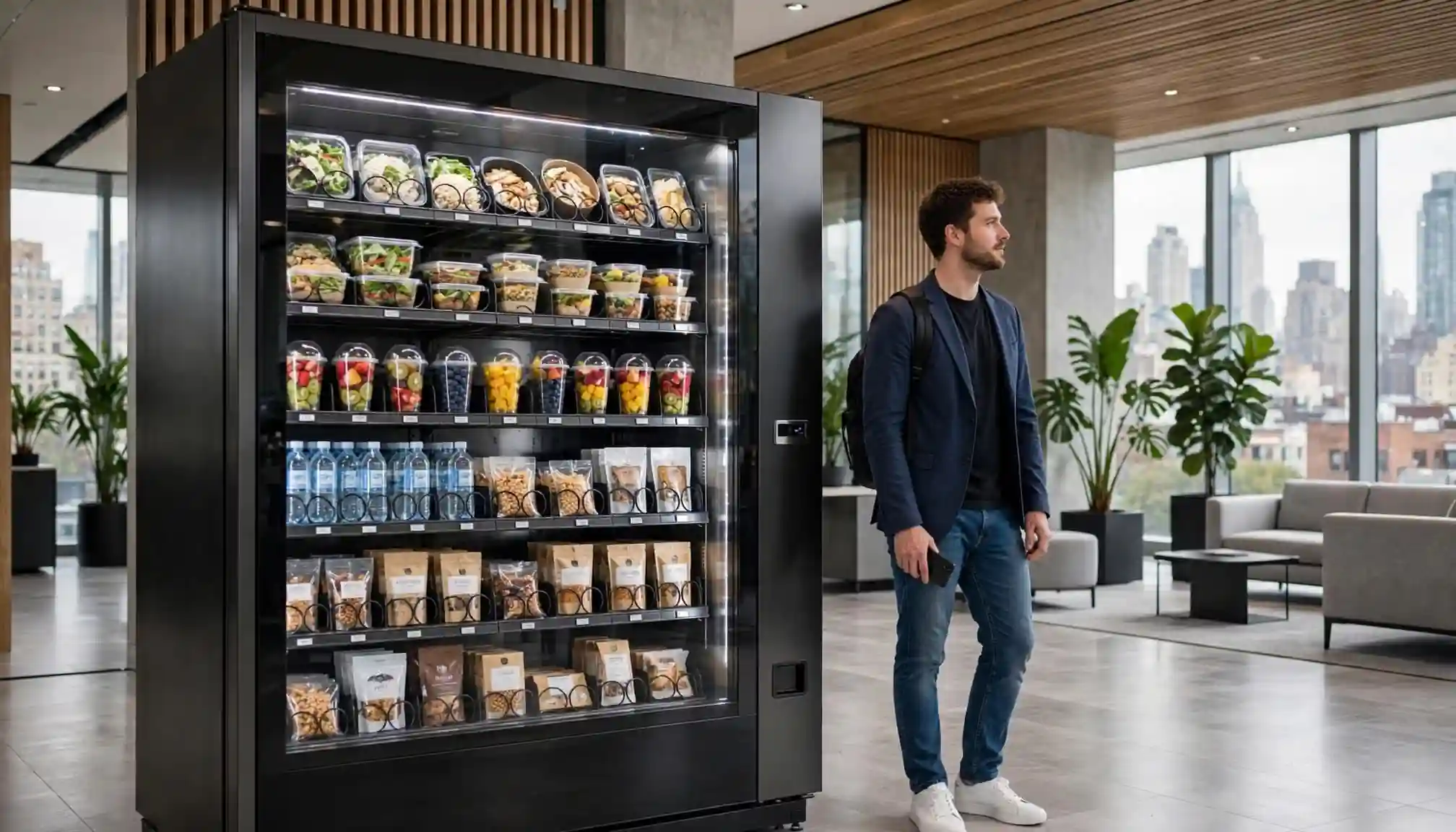
Refrigerated machines also broaden the menu. Fresh meals, fruit, nuts, bottled water, and ready-to-drink beverages fit locations where customers need more than candy. Smart vending in offices, hospitals, transit hubs, and apartment buildings is a more realistic near-term trend than fully robotic stores.
How NYC Regulations and Customer Demand Are Changing Food Vending
Vending machines and mobile food carts are different business models, but both sit within the city's grab-and-go food economy. A machine inside a private building may require property approval, electrical work, insurance, refrigeration controls, and a detailed site agreement. Food carts and trucks face their own city licensing and permit rules.
NYC Health states that mobile food vendors need both a license and a unit permit. Permits can run for up to two years, and inspected units can receive posted letter grades. Review NYC Health's mobile food vendor guidance before planning any cart, truck, or similar food operation.
Beginning July 1, 2026, the city will offer at least 2,200 supervisory license applications each year for five years. The city also plans 10,500 additional General Vendor licenses beginning January 15, 2027. Rules can change, so verify current details with relevant NYC agencies before committing capital.
Healthier Products Can Help Machines Stand Out
Many customers now look for water, plain nuts, fruit, better-for-you snacks, and fresh meals alongside familiar treats. Culturally relevant products can also fit a neighborhood or building better than a generic national assortment.
NYC's Green Cart program and food-access policies show the city's broader interest in healthier options. They do not automatically regulate every vending machine. Test a small mix first, track sell-through and spoilage, then adjust by location instead of assuming the same selection works across all five boroughs.
What the 2026 Opportunity Looks Like for NYC Operators
Offices may need quick lunches between meetings, while hospitals need 24-hour choices for staff and visitors. Gyms favor hydration and protein-focused items. Apartment buildings can support late-night essentials, and transit-adjacent properties need fast purchases for people on the move.
Before signing a deal, review foot traffic, dwell time, security, power access, refrigeration needs, delivery access, and the owner's revenue-share terms. Budget for the machine purchase or lease, cashless hardware, telemetry software, inventory, insurance, repairs, delivery, labor, permits, and site commissions.
Choose the location first, match the machine to demand, confirm compliance, then measure sales and waste.
Frequently Asked Questions
Can a vending machine go in any NYC building?
No. The property owner or manager must approve the placement, and the building may set rules for electricity, access, insurance, and restocking. A written agreement should cover commission terms and responsibility for repairs.
Do vending machines need refrigerated equipment?
Only if the product mix requires it. Fresh meals, dairy items, and some beverages need reliable temperature control, while shelf-stable snack machines may not.
Are contactless payments necessary?
They are close to essential for most high-traffic NYC locations. Cash acceptance can still help some audiences, but cashless options meet the expectations of customers who carry little or no cash.
How should operators test a new location?
Start with a limited product mix and monitor sales by item, time, and payment method. Review waste, stockouts, and service calls during the first several weeks before expanding the selection.
Conclusion
NYC vending is becoming more connected, cashless, health-focused, and tied to wider food-access rules. The best results come from a location-first plan that matches customer demand with reliable technology and a practical product mix.
Before making a large investment, confirm current NYC licensing details, secure property approval, and test demand with real sales data. A well-placed machine can become useful daily retail, while a poorly matched one becomes an expensive fixture.
Ready to start your vending business in NYC?
Browse 187+ Verified Vending Businesses & Locations →