

Selling a packaged snack is simpler than selling sandwiches, salads, dairy products, or other foods that need temperature control. NYC health code vending machine rules draw from the NYC Health Code, New York State regulations, and separate standards for machines on City property.
Your requirements can change with the food, machine setup, storage location, and supplier. Before stocking a machine, confirm the correct permit path, approved facility, temperature controls, labels, inspection duties, and the conditions that can stop sales.
Key Takeaways
- Shelf-stable snacks and refrigerated meals can follow different compliance paths.
- NYC Article 81 requires cold potentially hazardous food at 41°F or below.
- State vending rules use 45°F or below, plus automatic safety controls.
- Food sources, sanitation, labels, and storage can all face inspection.
- Machines on City property may also meet separate nutrition standards.
NYC Health Code Vending Machine Rules: What the Law Covers
NYC Health Code Article 81 covers food vending machines, including sanitation, maintenance, food safety, and commissary arrangements. New York State's 10 NYCRR Subpart 14-5 also sets rules for vending food and beverages.
The legal duties depend on what the machine sells. A machine with chips, candy, or sealed shelf-stable drinks has fewer temperature concerns than one holding sandwiches, cut fruit, eggs, dairy products, salads, or smoothies. Inspectors may review the machine, its food source, storage, cleaning, servicing, and the area around it.
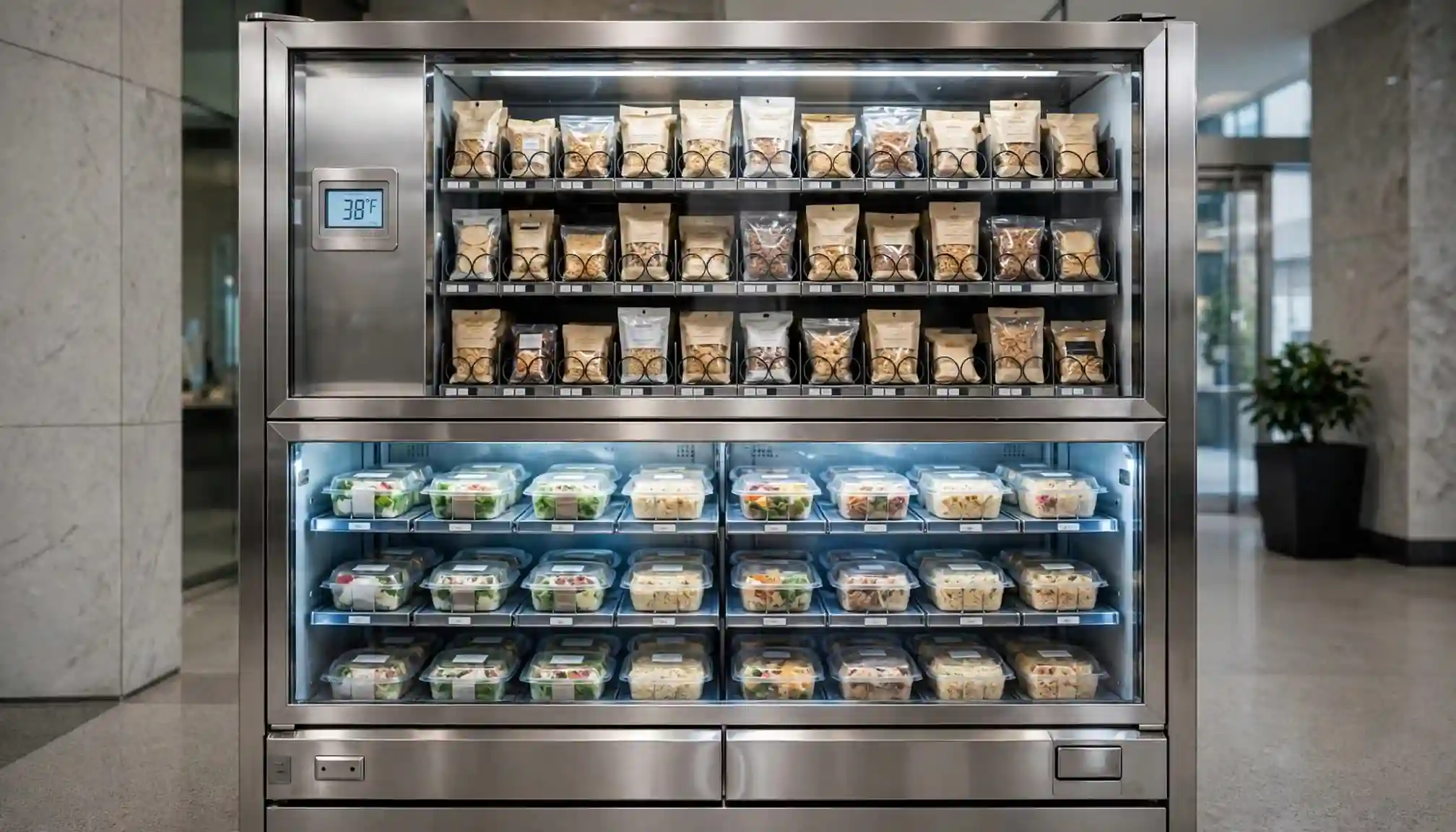
When a Permit, Approval, and Commissary Are Required
A pre-permit inspection may be required before an operator starts service. Operators may need to show that the machine is stocked, serviced, and stored through a licensed commissary or another approved facility.
Potentially hazardous food generally needs approved preparation, packaging, and labeling. A vending-machine operation is not automatically a mobile food unit, so don't assume every machine needs the same permit. Review the New York State permit and regulation guidance and confirm the proper approval route with NYC Health.
Why Shelf-Stable Snacks and Refrigerated Meals Are Treated Differently
A sealed package doesn't settle the question by itself. Chips and candy are usually easier to manage than refrigerated meals, but the product's ingredients and storage conditions still matter.
Foods that need refrigeration or hot holding create added duties. Operators may need temperature monitoring, automatic shutoff controls, traceable labels, and prompt removal when food leaves a safe range.
Temperature, Labeling, and Safety Controls for Food Vending Machines
NYC Article 81 requires cold potentially hazardous food to stay at 41°F or below and hot food at 140°F or above. However, New York State's vending-machine provision uses 45°F or below for cold food and 140°F or above for hot food.
Those numbers are not interchangeable. Confirm with NYC Health which provision applies to your equipment and food, then follow the stricter or specifically applicable requirement. Unsafe temperatures can trigger enforcement and removal of food from sale.
The Temperature Numbers Operators Must Track
State rules allow limited time during loading or servicing, but food must recover to a safe temperature within 30 minutes. The total time between 45°F and 140°F cannot exceed two hours.
Machines dispensing potentially hazardous food need thermostatic heating or refrigeration controls and automatic vending stoppage when temperatures leave the permitted range. State rules also call for a thermometer accurate to plus or minus 2°F that a servicing person can observe. NYC mobile food equipment guidance likewise calls for numerically scaled thermometers with that accuracy.
What Labels and Food Records Should Show
Potentially hazardous food should identify the name and address of the establishment where it was prepared and packaged. Accurate labels help inspectors trace food back to an approved kitchen or commissary.
If food is held under an approved time-as-a-public-health-control method, use clear time markings and discard times. Keep service and temperature records that match the machine's actual loading and maintenance schedule.
Inspections, City Property Standards, and Common Compliance Mistakes
Inspectors can review machine construction, food sources, equipment condition, sanitation, commissary service, and temperature controls. Article 81 also requires machines and their surrounding areas to stay clean and sanitary.
Contaminated food, unsafe temperatures, sewage, backflow issues, and dangerous electrical or mechanical conditions can create an imminent health hazard. Immediate action may include stopping vending or removing food.
City Property Has Separate Nutrition Rules
Machines on NYC property also fall under NYC Food Standards for vending machines and Executive Order 8. These nutrition standards apply separately to refrigerated, nonrefrigerated, and frozen machines.
They don't replace health-code duties for permits, sanitation, labels, temperature control, or inspections.
A Simple Pre-Opening Compliance Checklist
Before opening or relocating a machine, confirm the permit or approval, pre-permit inspection, approved facility arrangement, and product labels. Check the thermometer, heating or refrigeration controls, cleaning schedule, service records, and plan for removing food after a temperature failure.
Keep the machine and nearby area clean. Then verify current requirements with NYC Health before stocking it.
Frequently Asked Questions
Do all NYC food vending machines need the same permit?
No. Requirements can vary by food type, machine design, location, and facility arrangement. A snack machine and a refrigerated meal machine may follow different approval processes.
Can a vending machine sell sandwiches or salads in New York City?
Yes, but these foods usually need stronger controls. Confirm approved preparation, packaging, labeling, monitoring, refrigeration, and automatic vending controls before selling them.
What happens if a machine cannot keep food cold enough?
The machine may need to stop vending, and affected food may need removal or disposal. Inspectors can act immediately when unsafe temperatures create an imminent health hazard.
Are nutrition standards the same as health-code rules?
No. Nutrition standards for machines on City property are separate from health-code sanitation, temperature, labeling, permit, and inspection rules.
Where can operators verify current NYC requirements?
Start with NYC Health, the current Health Code, official mobile food vending guidance, and state vending regulations. New York's vending-food rules provide useful state-level detail.
Final Thoughts
NYC vending machine compliance depends on what you sell, how you store it, where the machine operates, and which approved facility supplies it. Start with the correct permit path, then maintain safe temperatures, accurate labels, clean equipment, and reliable service records.
Verify current requirements directly with NYC Health, especially before selling refrigerated or hot potentially hazardous foods.
Ready to start your vending business in NYC?
Browse 187+ Verified Vending Businesses & Locations →